Planet Defense: Space TD
- 4.2
- Rating
- 1.00M
- Installs
- Free
- Price

 Analysis by App-foxy
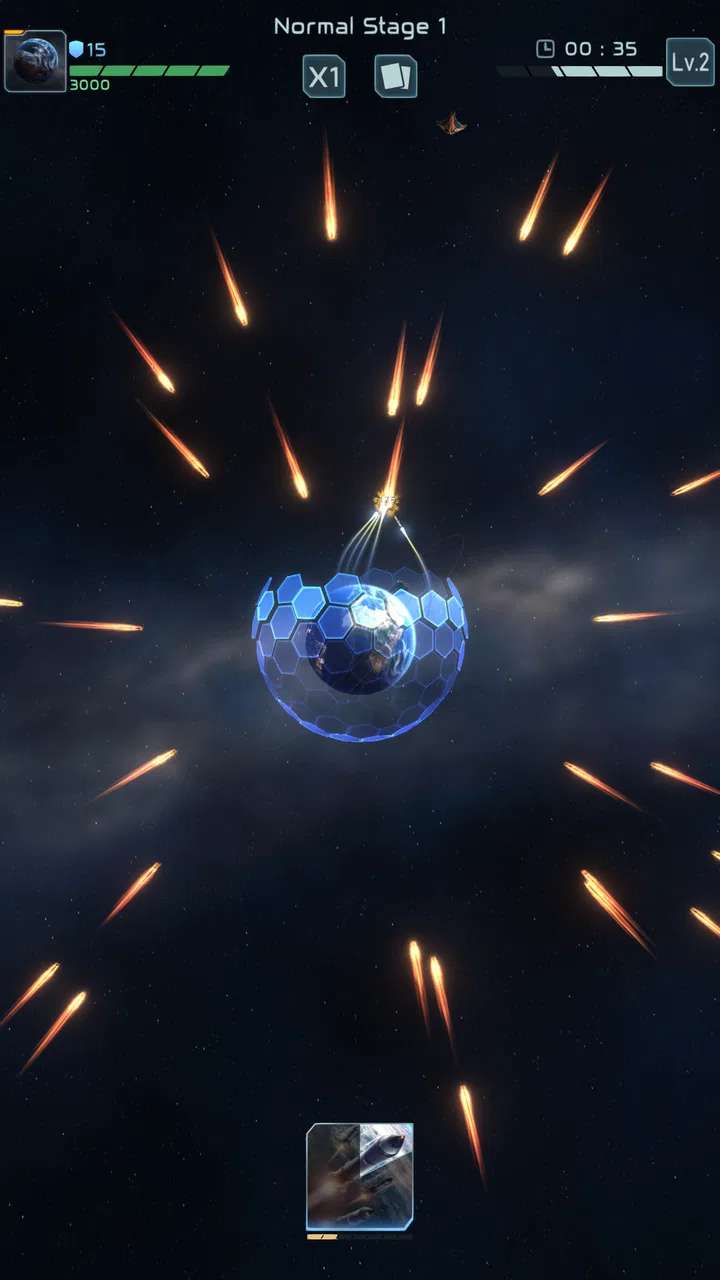
I went into Planet Defense: Space TD expecting a quick strategy game built around protecting a world from an incoming cosmic threat, and that is exactly the kind of experience it offers. It is a free Android strategy game from CyberJoy Games, aimed at players who enjoy making defensive choices rather than simply tapping through a passive experience. The central appeal is easy to understand: you are responsible for holding the line, and every placement or upgrade matters because the planet is only safe when your defensive plan works.
What makes the game worth a closer look is not the broad idea of defending a planet. Tower-defense games have used that foundation for years. The more interesting question is how much thought the game asks from you between attacks, how well it rewards changing a plan when things go wrong, and whether its progression remains satisfying after the initial novelty fades. In my experience, this is best approached as a compact strategy game for short sessions, with enough planning to make each attempt feel purposeful but without the complexity of a large-scale strategy simulator.
Planning the defense instead of reacting blindly
The first useful habit is to stop treating every defensive decision as an emergency response. A new player can easily spend resources as soon as they become available, but that often creates a scattered setup that looks busy without being strong. I found it more useful to think in terms of a defensive shape: where the most important protection should be concentrated, which areas can tolerate pressure, and which investment will remain useful when the next wave becomes more demanding.
You May Also Like

 Blood Strike: 2.5 Anniversary
Blood Strike’s Loadouts Turn Every Drop Into a Tactical Gamble
A close look at Blood Strike’s custom loadouts: how fast access to signature weapons reshapes its battle royale rhythm, rewards preparation, and narrows the gap between fights.

 Pandora - Music & Podcasts
Pandora’s Music Is Easy to Start, but Harder to Recover
Pandora’s strength is its low-effort path from a seed to a station. Its weak spot is how much confidence it asks you to place in connection, setup, and quiet recovery.

 8 Ball Pool
 Is Built on Rivalries, Rematches, and Routine
A close look at the rivalries, rematches, shared routines, and unanswered safety questions that turn a quick pool match into a persistent mobile community.

 Samsung Music
’s Quiet Strength Is Playing What You Already Own
Its reach comes less from spectacle than from dependable access to a personal library. That simplicity is both the app’s strongest retention engine and its ceiling.

 AccuWeather: Weather Radar
AccuWeather Review: A Quick, Clear Forecast for Everyday Decisions
For everyday plans, the best forecast is the one you can understand quickly. AccuWeather makes rain timing, radar, and local conditions easy to act on, with a few trade-offs.

 Hill Climb Racing
Why Hill Climb Racing Still Turns Crashes Into One More Run
A tiny car, a bumpy hill and one more upgrade: Hill Climb Racing keeps resurfacing because its simple chaos makes every near-miss feel personal.
More From Our News Desk



That kind of planning gives the game its strategic identity. The action may be presented through a cosmic battle, but the satisfying part is deciding what not to do. A defensive option that looks attractive immediately may not be the best use of resources if a more flexible improvement would protect several approaches or remain valuable across multiple attacks. I recommend leaving a small reserve whenever possible rather than committing everything at the first sign of danger. That reserve gives you room to correct a weak position instead of watching a promising run collapse because the last resource was spent too early.
Players coming from casual arcade games may initially find this restraint unfamiliar. The game is more enjoyable when you accept that a perfect-looking opening is not always the goal. A slightly untidy layout can be stronger if it gives you options later. I paid attention not only to whether a defense survived, but also to how much effort it required. A setup that barely holds while consuming every available improvement is less reliable than one that leaves space for adaptation.
This is also where the game differs from a purely automatic idle title. The premise may be approachable, but the player still has to make meaningful choices. You are not simply collecting rewards and waiting for a number to rise. The defensive outcome reflects how well you read the situation and how deliberately you spend what is available. That makes it a better fit for someone who wants a light strategy layer than for someone looking for a completely hands-off experience.
Small decisions have a longer shadow
One of the less obvious lessons is that early efficiency matters because it affects the shape of the entire attempt. If you invest in a narrow answer to the first problem, you may be forced into expensive corrections later. I prefer improvements that solve the current threat while keeping several future options open. That does not mean always choosing the safest-looking move. It means considering whether a decision creates flexibility or locks you into one fragile plan.
A practical approach is to identify the part of your defense that is doing the most work and protect it from becoming a single point of failure. If one area carries the whole battle, a change in pressure can make the rest of the setup irrelevant. Building a second layer, even if it is less powerful, can buy enough time for a recovery. This is a useful mindset for players who usually focus only on maximum damage. In a defense game, reliability can be more valuable than a spectacular peak.
I also found it helpful to judge an upgrade by timing, not just by strength. An improvement made before a difficult sequence can be worth more than the same improvement made after the danger has passed. That creates a simple but important planning horizon: think about the next problem before it arrives. Players who enjoy anticipating threats will get more from the game than those who wait until the screen is already overwhelmed.
Risk, reward, and the cost of overconfidence
The most satisfying moments come from taking a calculated risk rather than playing every stage in the safest possible way. Sometimes the stronger move is to delay a modest improvement and save for a more meaningful one. Sometimes that patience leaves you vulnerable. The game becomes interesting in the space between those choices, where you have to decide whether your current defense is stable enough to justify a bigger investment.
I would not describe every risky decision as equally rewarding. A gamble is only sensible when you understand what it buys you. Spending everything for a short burst of power can work if it prevents a serious threat, but it can also leave you unable to respond to the next change. The best risks are usually controlled ones: preserve enough of your defensive foundation that a setback does not end the run immediately.
This makes failure useful when you examine the reason behind it. If the defense fell because all resources were committed to one answer, the lesson is different from a loss caused by ignoring a weak side. I recommend treating each failed attempt as a short planning review. Ask which decision created the problem, whether the problem appeared earlier than expected, and whether the solution should be a stronger defense or simply better timing. That process gives the game more depth than its straightforward premise might suggest.
There is also a psychological trap here. A successful early sequence can make you feel richer than you really are, encouraging unnecessary upgrades or an overly aggressive layout. I found that the safest way to maintain momentum was to separate “working well” from “ready for anything.” A defense can handle the current pressure and still be poorly prepared for the next one. Keeping that distinction in mind prevents a comfortable start from becoming a careless middle game.
Where the free-to-play model affects the experience
The game is free to download, which makes it easy to try without committing money at the beginning. Its in-app purchases range from $2.99 to $349.99 per item, so players who spend should approach the purchase system carefully. I would not make a buying decision during a frustrating loss. That is exactly when it is hardest to tell whether you need a better strategy, more patience, or simply a break.
For a player who wants a no-cost strategy game, the sensible approach is to play long enough to understand the ordinary decision loop before considering any purchase. If the planning itself is enjoyable, the game has value without immediately turning progress into a transaction. If the only enjoyable moments come when progression is accelerated, that is a warning that the experience may not suit you.
This is especially important for younger players. The content rating is Everyone, but the presence of optional purchases still makes device-level spending controls worth considering. I would also recommend that parents explain the difference between playing better and paying to reduce friction. The game can be a harmless planning exercise, but a child may not naturally separate a difficult stage from a reason to buy something.
In practical terms, the purchase range means the game is not the right choice for someone who wants a completely fixed-price experience with no spending pressure around it. A premium strategy game may be a better alternative for that audience, even if it offers fewer updates or a smaller progression system. Planet Defense: Space TD is more suitable for players who are comfortable trying a free game first and deciding later whether its longer-term structure deserves further investment.
Adapting when the first plan stops working
Good defense is not just about building a strong opening. It is about noticing when the opening has reached its limit. I found the game more engaging when I stopped trying to repeat one successful arrangement exactly. A plan that works against one pattern can become inefficient when pressure shifts, and copying it without adjustment turns strategy into routine.
My preferred workflow is simple. I begin with a compact foundation, watch where the pressure actually develops, and then reinforce the area that threatens to break first. I avoid making several changes at once because that makes it difficult to understand what helped. One targeted adjustment teaches you more than a complete rebuild. It also preserves resources for the next decision, which is often more valuable than a dramatic but poorly understood change.
Another useful habit is to distinguish a temporary weakness from a structural one. A temporary weakness may only need better timing or a small reinforcement. A structural weakness means the whole defense depends too heavily on one location or one type of answer. The first problem can be patched; the second requires a different plan. Recognizing that difference helps prevent wasted effort, especially when a run is already under pressure.
This adaptive quality is where the game can appeal to players who usually find tower defense repetitive. The familiar format becomes more personal when you are forced to revise your assumptions. It is not enough to know that an attack is coming. You need to decide how much information you have, how much uncertainty you can tolerate, and whether the current setup deserves another investment or a complete change of direction.
Who will enjoy the learning curve
I think the game works best for people who like short strategic problems with visible consequences. You do not need to be an expert in complex strategy games to start making sensible choices, but you do need to enjoy learning from imperfect attempts. The experience is also a good fit for someone who wants a space-themed setting without the heavy management burden of a grand strategy game.
It is less suitable for players who want constant action with little downtime between decisions. Those players may prefer an arcade defense game where reflexes and rapid tapping dominate. It may also disappoint people seeking a deep simulation with extensive diplomacy, exploration, or long-term world management. The focus here is narrower: protect the planet, manage defensive priorities, and make your resources work under pressure.
A realistic everyday use case is a short break between tasks. I could imagine playing a few attempts while waiting for an appointment or during a commute, provided the device and situation allow attention. The sessions are easy to understand without requiring a large block of uninterrupted time, but I would not play carelessly while distracted. A strategy game loses its appeal when decisions are made automatically, and a rushed session can turn a manageable challenge into a frustrating loss.
For families, the Everyone rating makes the theme broadly accessible, while the strategic layer gives older children and adults something to think about beyond simple visual effects. Still, the optional purchase structure means I would set spending boundaries before handing the device over. For competitive-minded players, the game can provide a personal challenge, but it should not be confused with a deep multiplayer strategy environment unless that is clearly what you are seeking elsewhere.
How the depth holds up over time
The long-term question is whether the basic defense loop continues to offer decisions after the first few sessions. In my view, its staying power depends heavily on how much you enjoy refining plans. If you only want to discover one winning setup and repeat it, the experience may become familiar quickly. If you like comparing efficient and safe approaches, testing different spending timings, and recovering from mistakes, the same core structure can remain more interesting.
That is a trade-off rather than a flaw. A focused game is easier to pick up, but it may not provide the broad variety of a larger strategy title. Players should decide what kind of depth they want. This game offers depth through choices made within a defensive scenario, not through a huge collection of unrelated systems. I appreciate that clarity, although I would move to a more expansive strategy game if I wanted a campaign built around diplomacy, exploration, or extensive customization.
The current version is 0.1.53, and the game was released on November 23, 2025. Those details matter because a relatively early version can feel like a foundation that is still finding its identity rather than a fully mature strategy package. I approached it with that in mind: enjoyable for its central loop, but not something I would judge by the breadth of a long-established premium series.
Its audience is already substantial, with over 500 thousand installs, while its average rating is 4.2 from around 7 thousand ratings. That combination suggests a game that has attracted meaningful interest without being universally loved. I read that as a reason to set realistic expectations. It is approachable and appealing, but individual tolerance for progression, repetition, and optional spending will strongly affect whether it becomes a regular game.
Device compatibility is also relatively broad because it supports Android 7.1 and later. That makes it more accessible to people using older phones, though actual comfort can still depend on the device and how smoothly it handles the game. I would install it on the phone I actually plan to use, rather than assuming that broad operating-system support guarantees an identical experience everywhere.
What I would do before recommending it
I would give a new player three tests. First, play without spending and see whether the defensive decisions themselves are enjoyable. Second, deliberately try one conservative plan and one more ambitious plan, then compare not only the result but also how much room each leaves for recovery. Third, after a loss, change one major decision instead of rebuilding everything. These tests reveal whether the game rewards your preferred style of thinking.
I would also recommend keeping an eye on resource timing. Do not ask only, “What can I improve now?” Ask, “What will this improvement allow me to handle later?” That small change in wording encourages better planning and exposes inefficient habits. It is one of the most useful lessons the game can teach, particularly for players new to tower-defense strategy.
If you are buying for someone else, I would mention the free entry point, the Everyone rating, and the optional purchase range before they begin. If you are choosing between this and a premium alternative, choose Planet Defense: Space TD when you want an accessible cosmic defense game that you can try immediately. Choose the premium option when predictable costs, a more complete campaign, or a broader strategic system matters more than easy access.
My strategy verdict
After spending time with it, I see Planet Defense: Space TD as a straightforward but potentially rewarding strategy game whose best moments come from planning under pressure. CyberJoy Games keeps the premise easy to grasp, yet the game can still make you think about timing, flexibility, reserves, and the difference between surviving one attack and building a defense that can adapt.
I like it most as a free game for short, focused sessions. It gives me a reason to pause before spending resources, and it makes a failed plan informative when I take the time to identify the real weakness. The main limitations are equally clear: players wanting a fixed-price experience may dislike the in-app purchase range, and players seeking a vast strategy simulation may find the defensive focus too narrow.
My recommendation is therefore conditional but positive. Try it if you enjoy planet-defense strategy, gradual improvement, and decisions where the safest-looking move is not always the strongest one. Skip it if you want purely reflex-based action, a completely hands-off idle game, or a premium structure with no optional spending around progression. For the right player, Planet Defense: Space TD is a pleasant way to turn a few spare minutes into a small exercise in risk management, adaptation, and careful planning.
FAQs for Planet Defense: Space TD
01What is the main objective of Planet Defense: Space TD?
The primary goal in Planet Defense: Space TD is to strategically place and upgrade your towers to defend your planet from waves of invading alien forces. As a tower defense game, players must use strategy and planning to prevent enemies from breaching defenses and reaching their base.
02Does Planet Defense: Space TD offer any multiplayer features?
Currently, Planet Defense: Space TD focuses on a single-player campaign where players can progress through various levels and difficulties. While there are no direct multiplayer modes, players can compete on leaderboards and share achievements with friends, fostering a community-driven competitive spirit.
03Are there in-app purchases in Planet Defense: Space TD?
Yes, the game includes in-app purchases. Players can buy resources, special upgrades, and cosmetic items to enhance their gameplay experience. However, the game is designed in a way that doesn't require purchases to complete the main storyline, ensuring a fair play environment for all.
04How often does Planet Defense: Space TD receive updates?
The developers are committed to keeping Planet Defense: Space TD fresh and exciting with regular updates. These updates typically include new levels, towers, and enemies, along with balancing changes and bug fixes to improve overall gameplay and user experience.
05What are the system requirements for Planet Defense: Space TD?
Planet Defense: Space TD is designed to run smoothly on most modern Android and iOS devices. For Android, it requires version 5.0 or higher, and for iOS, version 10.0 or later. It’s recommended to have at least 1 GB of RAM for optimal performance.
Pros
- Engaging tower defense gameplay.
- Variety of upgradeable towers.
- Stunning graphics and animations.
- Challenging levels keep you hooked.
- Offline play available.
Cons
- In-app purchases can be pricey.
- Occasional lag on older devices.
- Limited storyline depth.
- Ads can be intrusive.
- No multiplayer mode.

Planet Defense: Space TD
Gallery